Can a lamp costing less than 40 euros, sold at a general retailer, become a cultural object—one that is featured in design publications, collected, and sometimes resold for more than its original price? The answer is yes, and this shift has a very specific name: “artification.”
At Studio Artera, an agency specializing in collaborations between contemporary artists and brands, we’ve been observing this phenomenon firsthand, working alongside our consumer goods clients who are seeking to move upmarket. What the most compelling recent examples from France demonstrate is that “artification” depends neither on the sector nor on the budget—it depends on a method.
The term “artification” is a neologism coined by sociologists Nathalie Heinich (CNRS) and Roberta Shapiro (EHESS), who theorized it in the 2012 collective work *De l’artification. Enquêtes sur le passage à l'art, published in 2012. It refers to the process by which an object, practice, or field previously situated outside the realm of art comes to be recognized, both socially and institutionally, as belonging to the realm of art.
This shift is never merely an aesthetic judgment. It is not enough for a brand to declare that a product is a work of art for that to be true: other stakeholders—critics, institutions, the specialized press, and collectors—must collectively validate this shifting of boundaries. The concept was first explored in relation to objects far removed from the commercial sphere—graffiti becoming street art legitimized in galleries, comic books becoming the “ninth art”—before being applied today, with the same rigor, to the realm of branding.
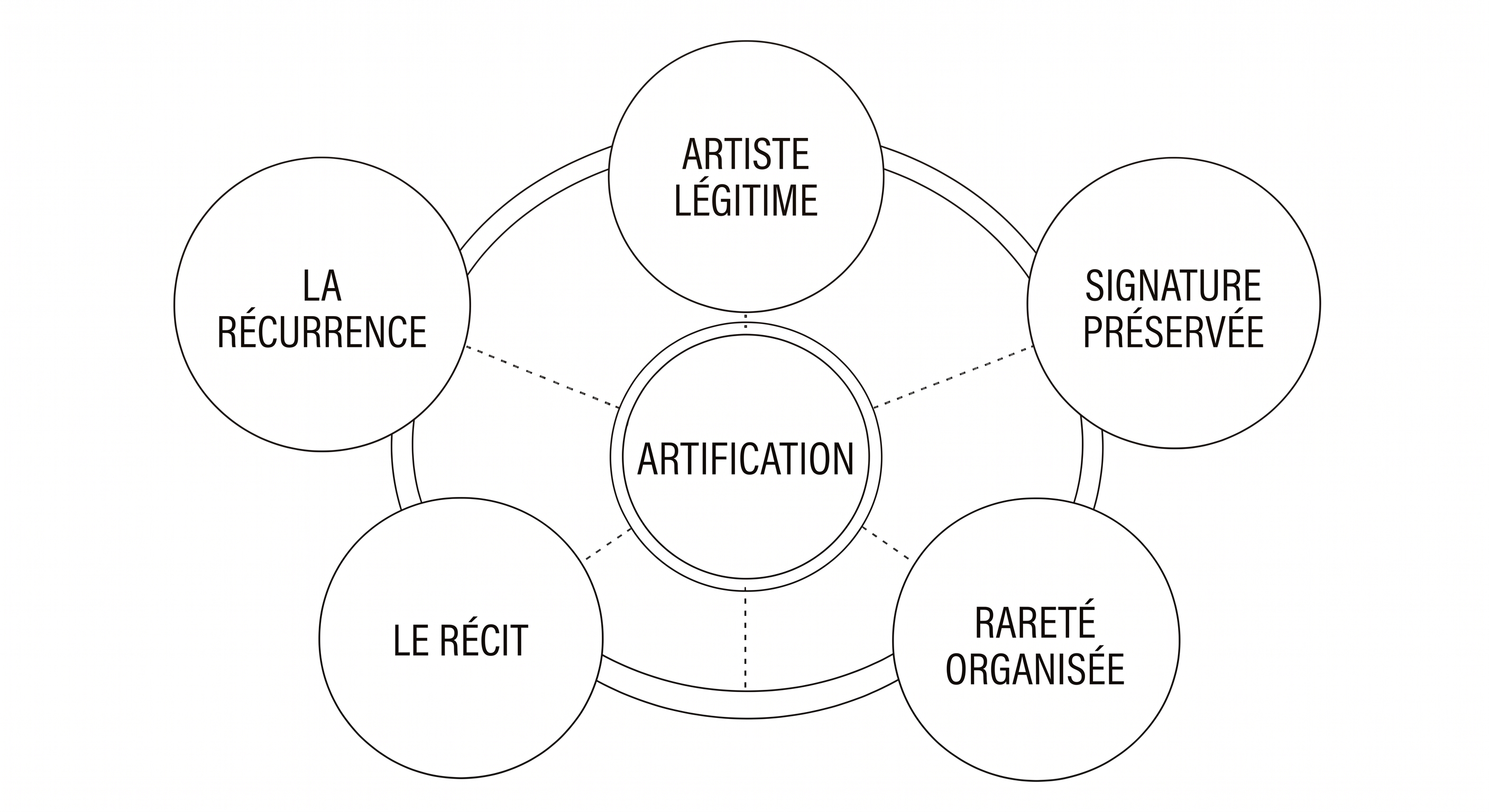
The transformation of a brand into a work of art is rarely a matter of chance. Five conditions recur in virtually all documented cases.
An artist who is already established. The brand does not create an artist: it capitalizes on recognition that has already been established elsewhere (galleries, exhibitions, specialized press) and circulates it within its own sphere.
A signature preserved. The final product must remain recognizable as the creator’s work. As soon as the brand imposes too many marketing constraints, the collaboration devolves into mere branding.
Organized scarcity. A numbered edition or limited availability replicates the conventions of the art market within the mass-market retail sector.
The narrative. A curated product is always accompanied by a discussion of the creative process, presented in a way that draws on the conventions of an exhibition rather than those of a store shelf.
Recurrence. Une collaboration isolée reste un coup de communication. C'est la répétition, saison après saison ou année après année, qui installe une marque comme acteur culturel légitime.
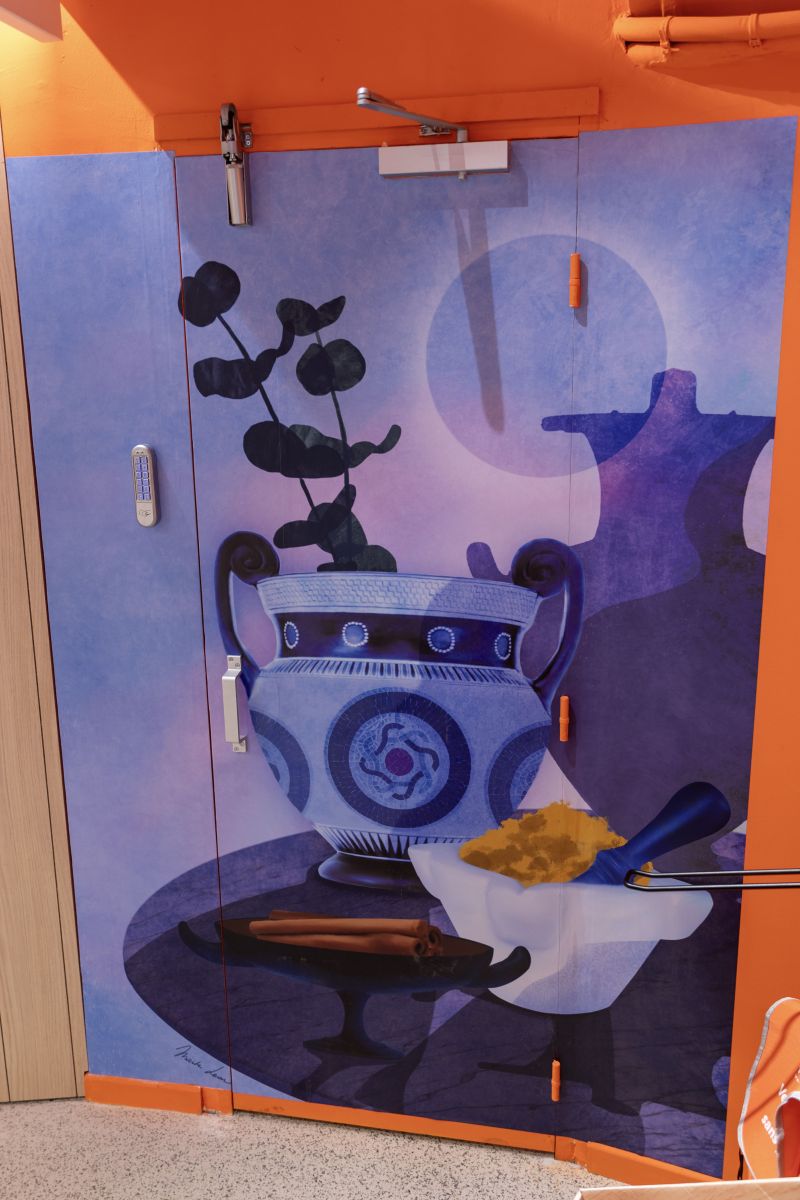
Franprix illustrates a case that is less spectacular than that of luxury brands, but just as influential: that of a neighborhood retailer that has, over several years, forged a lasting connection with street art. In September 2018, to celebrate its 60th anniversary, the chain invited five well-known figures from the Parisian street art scene—Hobz, Jérôme Mesnager, Arnaud Liard, Lek, and Zenoy—to paint live on hoardings set up in front of five Parisian stores, after which these works were exhibited and then sold to benefit a charitable organization.
This one-time initiative has continued over time. In 2024, Franprix tested a new store format in Paris’s 20th arrondissement that incorporated a true “gallery of local artists,” in partnership with the association Expos to Day: works by local artists, such as illustrator Maite Léon, are displayed directly in the store, amid the everyday grocery shopping experience.
The Franprix case shows that art integration doesn’t require a luxury-level budget: it requires a consistent approach. A major retail chain that, over several years, consistently supports the same local art scene builds a cultural legitimacy that a one-off initiative could never achieve.
Season after season, Monoprix has established a regular collaboration with renowned creators and designers that goes far beyond a simple fashion partnership. The brand has formed a multi-year partnership with Villa Noailles, a leading venue for contemporary design, featuring a new designer from the Design Parade festival each year. It has also collaborated with the Bureau Benjamin studio, known for its iconic 3D forms inspired by digital renderings, and has forged direct ties with cultural institutions: a collaboration with the Musée d’Orsay and a monumental carte blanche granted to artist Jérémy Pradier-Jeauneau at the Arc de Triomphe—both announced for fall 2026—illustrate this deliberate alignment with venues that confer artistic legitimacy.
The result of this consistent policy: certain collections selling out within hours, media coverage that extends far beyond trade publications focused on mass retail, and a shift in how the brand is perceived by a segment of the public—now seen as a provider of accessible design rather than just a downtown supermarket.

Few consumer brands can claim such a long artistic heritage as Perrier. From the early 20th century onward, the brand enlisted poster artists such as Raymond Savignac, Jean Carlu, and Jean-Gabriel Domergue to create its advertising visuals. This tradition continued with major figures in contemporary art: Andy Warhol and Salvador Dalí each created designs for the brand during the 20th century.
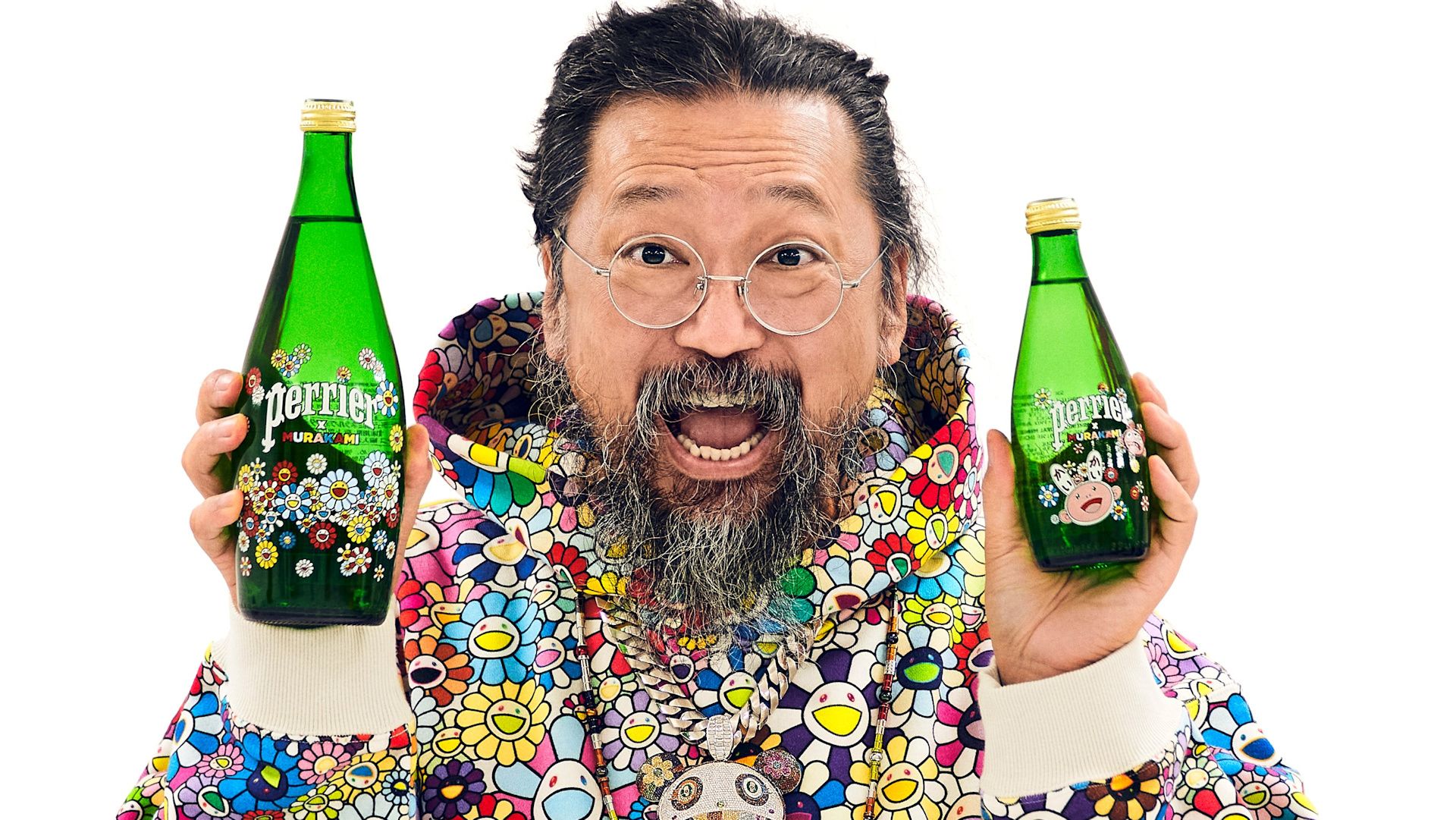
This policy has continued recently in a more structured form: In 2020, Perrier launched a limited-edition collaboration with Japanese artist Takashi Murakami, who adorned the iconic green bottle with his signature smiling flowers; then in 2023, to mark its 160th anniversary, the brand commissioned French designer Philippe Starck to reinterpret the very shape of its bottle, whose ridges evoke a Fresnel lens.
The Perrier case illustrates a key principle of “artification”: it is not the novelty of a collaboration that builds a brand’s cultural legitimacy, but its consistency over time. Warhol, Dalí, Murakami, and Starck are not isolated incidents; they are part of the same artistic vision that has been maintained for over a century.
Since 2015, IKEA has continued its IKEA Art Event collection each year, partnering with international artists and designers to produce a series of limited-edition pieces. The 2021 edition, for example, brought together five designers with very different styles—Daniel Arsham, Gelchop, Humans since 1982, Sabine Marcelis, and Stefan Marx—each of whom created two pieces that straddle the line between functional objects and works of art.
What sets IKEA apart is not the quality of any one particular edition, but the recurring nature of the program: it is not a one-off event but an annual event with its own name, which, over time, builds a recognizable cultural policy that is followed by the international design press.
Not all brand-artist collaborations constitute “artification.” Many remain mere marketing campaigns, without any real shift in perception. Three criteria distinguish successful artification from superficial branding: a true collaboration gives the artist real control over the outcome, whereas branding imposes marketing specifications that stifle the artist’s creative process; a genuine collaboration is part of a sustainable cultural policy, whereas a mere facade remains an isolated, one-off effort with no follow-up; a genuine collaboration is validated by legitimate third parties (specialized press, institutions, critics), whereas a mere facade exists only in the brand’s own communications.
When this boundary is crossed, the risk has a name in public discourse: “artwashing”—that is, the exploitation of art for purely promotional purposes, without any genuine commitment to artists or artistic creation. This risk is even greater for mass-market brands, whose artistic legitimacy is not automatically assumed and therefore hinges on every detail of the execution.
For a brand seeking to move upmarket, “artification” offers a lever that traditional marketing cannot provide: cultural legitimacy that cannot be bought with advertising space. It allows a brand to broaden its perception beyond its original sector, reach a target audience more attuned to culture and design without alienating its long-standing customer base, generate press coverage and social media buzz that the product alone would never achieve, and, over time, establish a brand image as a curator rather than merely a distributor.
This is a long-term effort, not a one-off initiative. As Franprix, Monoprix, Perrier, and IKEA demonstrate, it involves choosing the right artists, building a framework that is credible in the eyes of the art world, and staying the course over time.
At Studio Artera, we support consumer brands, retailers, and institutions in the design and implementation of these collaborations: sourcing artists who align with your brand identity, structuring the partnership from both creative and legal perspectives, producing the artwork or edition, and managing its activation and distribution. We work with nearly 20 represented artists on projects ranging from a monumental fountain to a trade show booth, a series of portraits, or a pop-up exhibition.
What Franprix, Monoprix, Perrier, and IKEA have in common—beyond their very different worlds—is that they have treated art as a long-term commitment rather than a one-off marketing stunt. Our method for choosing the right creative partner is detailed in this guide to selecting an artist for your brand, and the full historical context of these collaborations is covered in our article on the history of artist-brand collaborations.
Are you interested in implementing a cohesive art strategy for your brand?
👉 Check out our brand and corporate projects
👉 Discover the artists we represent
👉 Let's discuss your project
The "artification" of a brand refers to the process by which a product or brand, initially perceived as purely commercial, comes to be recognized as part of the art world, thanks to a credible collaboration with established artists, a specific presentation, and recognition by third parties in the art world.
The term was theorized by French sociologists Nathalie Heinich and Roberta Shapiro in their book *De l'artification: Enquêtes sur le passage à l'art*, published in 2012 by Éditions de l'EHESS.
Artification involves a genuine and recognized shift in the perception of an object toward the realm of art, validated by legitimate third parties. Artwashing consists of borrowing the visual codes of art for purely promotional purposes, without any genuine commitment to the artistic process or external recognition.
Franprix, with its recurring street art projects since 2018 and its neighborhood gallery launched in 2024; Monoprix, with its recurring collaborations with designers and its partnership with the Villa Noailles; Perrier, with over a century of artistic collaborations, including those with Murakami and Starck; and IKEA, with its annual IKEA Art Event collection launched in 2015, are frequently cited examples of consumer brands that have established a sustainable cultural policy.
No. The Franprix case shows that a neighborhood retailer can build genuine cultural legitimacy by consistently demonstrating, over several years, its commitment to a single local arts scene—even without the resources of a luxury brand.
Specialized agencies such as Studio Artera assist consumer brands, retailers, and institutions with artist sourcing, creative and legal structuring, and the production of collaborations designed to last.


