All articles

The blog

Brand partnerships
Friday, April 3, 2026 / Reading time: 5 min

Why Brands Are Collaborating with Contemporary Artists in 2026

By 2026, collaborations between brands and contemporary artists are no longer a marketing gimmick reserved for major luxury houses. They have become a strategic tool that companies across all sectors—hospitality, tech, retail, and events—are incorporating into their brand strategies. And for one simple reason: in an environment saturated with standardized content, contemporary art is one of the last vehicles for emotion that cannot be replicated by an algorithm.

At Studio Artera, we have been helping brands collaborate with exceptional visual artists since our founding. Prada, Paris Saint-Germain, Maison Margiela, Sopra Steria, NetJets, Levi’s—each of these brands has come to the same conclusion: a work of art creates something that no traditional advertising campaign can produce. In this article, we analyze why this trend is gaining momentum in 2026, what brands specifically expect from it, and how to make the most of it.

Why 2026 marks a turning point for artistic collaborations

Several factors point to the current acceleration.

The paradox of hypervisibility. Brands have never communicated as much as they do today. And yet, according to a PwC study cited during our presentation at VivaTech, 79% of executives believe that art in the workplace directly improves their organization’s reputation and brand image. This figure reveals a profound tension: the more communication channels proliferate, the more audiences develop resistance to standardized messages—and the more they respond to what seems authentically human.

Artificial intelligence is redefining differentiation. By 2026, AI tools will enable any company to produce sophisticated visuals in a matter of seconds. This upward leveling of generated design creates the opposite effect: the works of a singular artist—one who embodies a distinct approach, a unique visual language, and an irreplaceable worldview—become exponentially more valuable. Contemporary art embodies what AI cannot reproduce: a point of view.

Audiences expect cultural consistency. By 2026, consumers and employees will evaluate brands as much for their meaning as for their offerings. Collaborating with an artist is no longer seen as a mere stylistic exercise; it is interpreted as a statement of values. It says something about what a brand believes in, what it stands for, and how it positions itself within the culture.

The 4 Strategic Reasons Why Brands Partner with Contemporary Artists

1. Standing out in a saturated market

The first reason is the most pragmatic. In virtually every sector, products and services are becoming increasingly similar. Visual styles are being copied, and marketing approaches are converging. Contemporary art offers a radical and irreplicable departure from the norm.

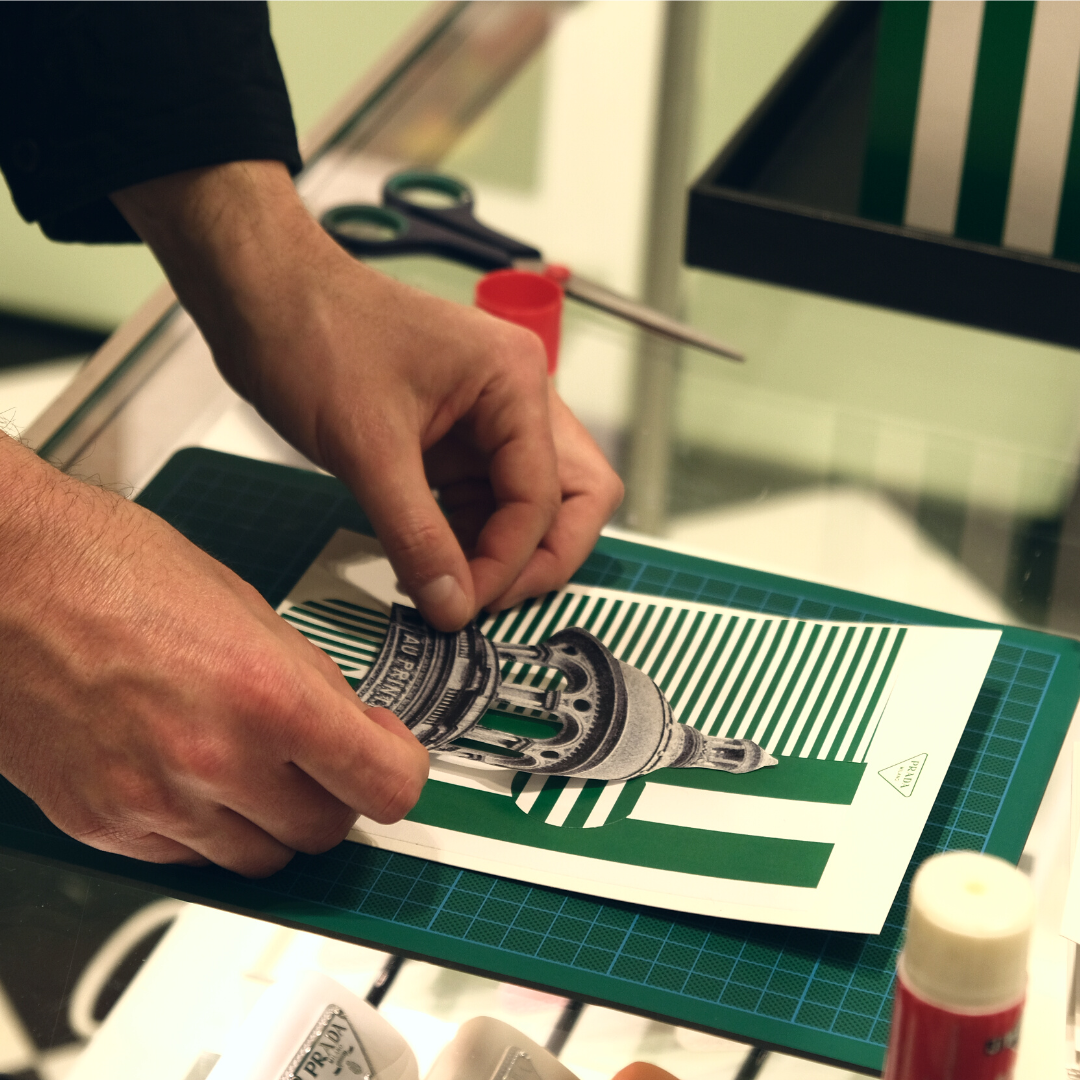
When Prada teams up with Itchi, the collage artist represented by Studio Artera, the brand isn’t looking for a generic graphic design—it’s seeking a visual universe unlike anything else. The work of Itchi, a leading figure in the French collage scene who has also collaborated with Tommy Hilfiger, Vacheron Constantin, and The New York Times, brings a visual identity that cannot be copied: it is uniquely his own.

This distinction has a direct impact on attention. A work of art creates a pause, a positive friction, and a memory that the human brain processes differently from an advertising image.

Prada x Itchi Artistic Collaboration — Studio Artera
Prada x Itchi - Studio Artera. Artist Itchi has brought his unique collage style to one of the world’s most discerning fashion houses.

2. Connect with audiences on an emotional level

A brand can persuade through logic. It cannot always move people emotionally. Art, on the other hand, bypasses rationality.

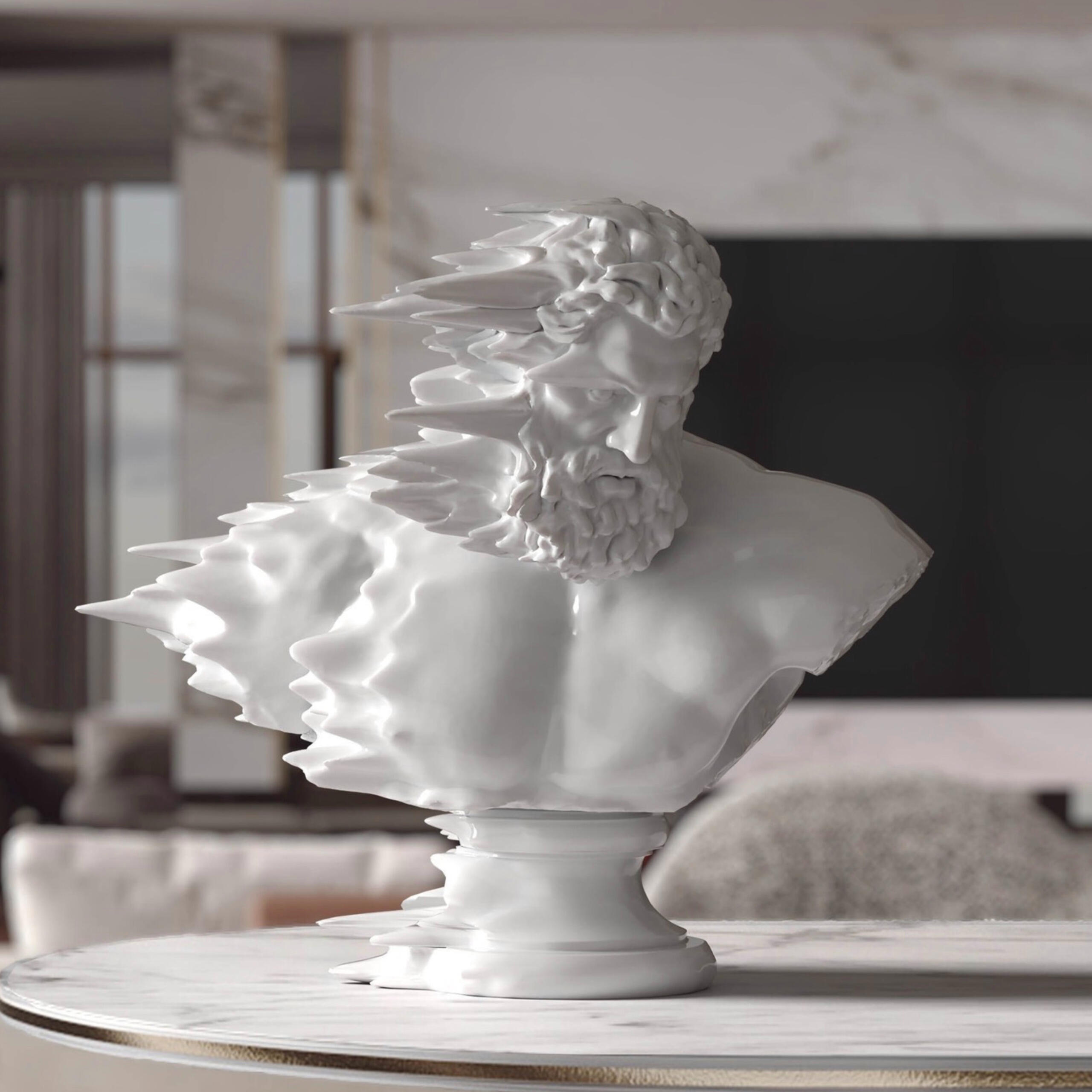
At Sopra Steria’s 2025 Kick-Off event, which brought together more than 1,000 international senior executives at the Palais des Congrès in Paris, Studio Artera collaborated with artist Léo Caillard, whose works reinterpret classical heritage through a digital lens. The result: at an event entirely dedicated to digital transformation, it was art that created the most profound moments of reflection, posing questions that the strategic presentations could not articulate.

This is no coincidence. According to a Harvard University study, companies that invest in arts programs see a 29% increase in employee retention. Emotion fosters engagement, and engagement drives performance.

Corporate Event Art Collaboration — Sopra Steria x Léo Caillard x Studio Artera
Sopra Steria x Léo Caillard - Kick-Off 2025, Palais des Congrès de Paris. Over 1,000 managers gathered for an artistic experience designed by Studio Artera.

3. Strengthen a brand’s cultural legitimacy

By 2026, being a culturally relevant brand will no longer be a luxury but a prerequisite for the premium segments and high-spending customers. The question is no longer “Is our product good?” but “Does our brand have something to say about our times?”

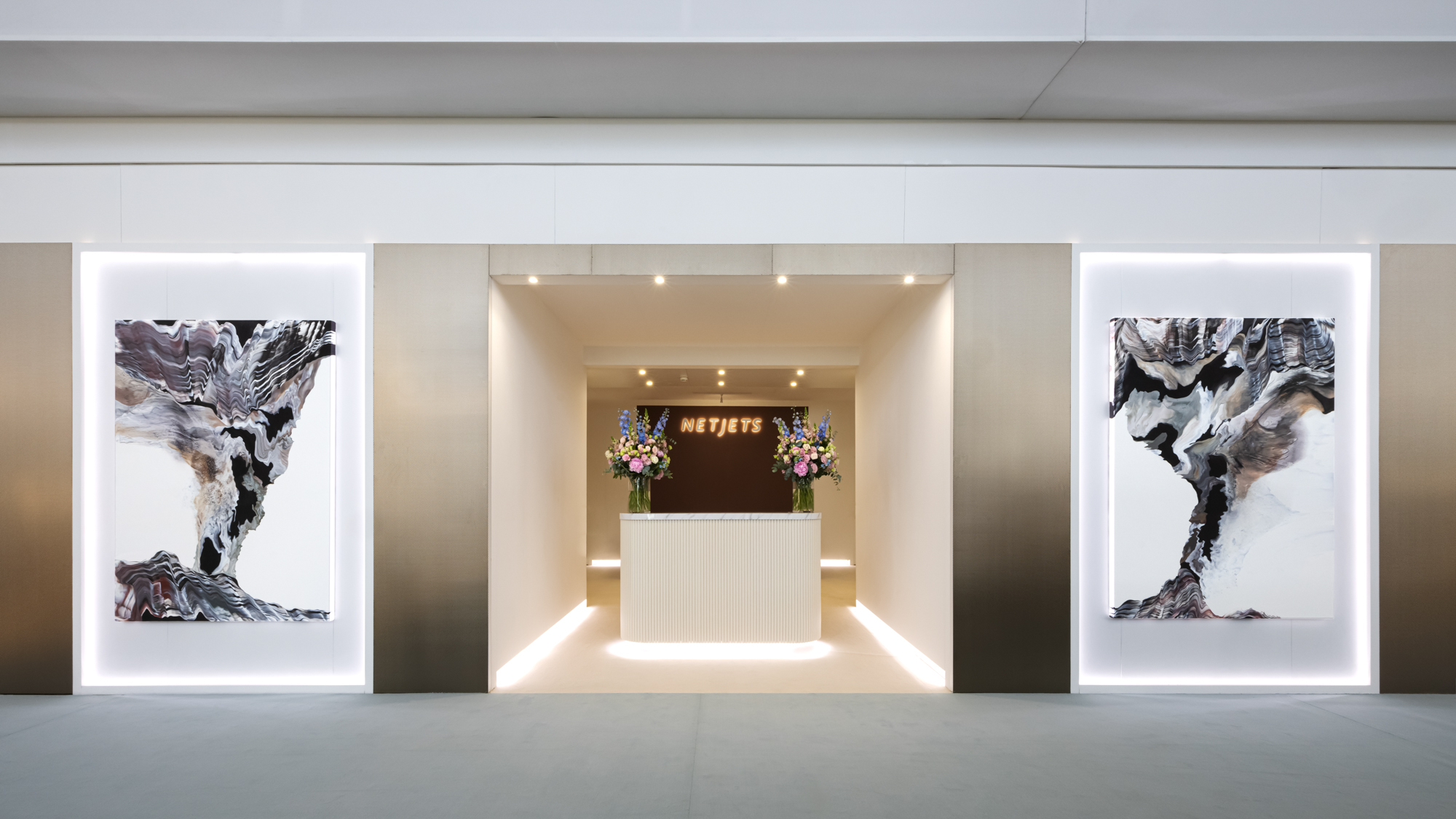
The collaboration with Silvère Jarrosson for NetJets at Art Basel in Basel, Paris, and Miami perfectly illustrates this positioning. The brand sought to establish its place in the world of contemporary art and luxury by associating its identity with an artist whose work—inspired by fluidity, movement, and energy—precisely embodied the values it wished to project. An immersive exhibition, a presence at the world’s most important art fairs, and a genuine cultural foundation.

Luxury Brand and Contemporary Art Collaboration — NetJets x Silvère Jarrosson, Art Basel
NetJets x Silvère Jarrosson - Art Basel (Basel, Paris, Miami). Studio Artera designed an immersive exhibition to establish NetJets within the international contemporary art scene.

4. Generate measurable impact and tangible results

Contrary to popular belief, artistic collaboration is not just about image and emotion. It generates tangible, measurable benefits.

Quentin DMR’s installation for Levi’s at the Champs-Élysées flagship store is a prime example. The monumental installation by the artist, photographer, and visual artist represented by Studio Artera generated significant media coverage, massive social media engagement, and a documented increase in store traffic. The collaboration was not viewed merely as a marketing expense but as an investment with a measurable return.

Similarly, Adeline Care and Paris Saint-Germain: by giving the artist free rein to portray the players with sensitivity and human depth, the club produced a piece of work that touched millions of people on social media on a scale that no traditional campaign could have achieved on a comparable budget.

Retail Brand Collaboration — Levi's x Quentin DMR x Studio Artera
Levi's x Quentin DMR - Monumental installation at the Champs-Élysées flagship store. Social media campaign, documented press coverage.

What brands specifically expect from an artistic collaboration

Not all brands that collaborate with contemporary artists have the same goal. In practice, we see four main scenarios:

Event-driven activation. Turning a corporate event (kick-off, launch, brand anniversary) into a memorable cultural moment. That’s what Sopra Steria achieved with Léo Caillard, and what VivaTech accomplished with Benjamin Bardou.

The visual identity of a place. Creating a unique atmosphere in physical spaces: hotels, flagship stores, corporate headquarters. The Hoxton collaborated with Caroline Derveaux and Bombay Sapphire to transform its common areas into an immersive experience that aligns with the hotel’s DNA.

Limited editions and brand content. Co-creating an object, a visual, or a limited-edition series that generates desire, press coverage, and engagement. This is the approach that guided Le Barteleur in its collaboration with Itchi and AMI Paris in its partnership with Emilie Ettori.

Long-term cultural positioning. Gradually establishing a brand within a cultural landscape by building a lasting relationship with artists, as NetJets has done with Silvère Jarrosson within the Art Basel ecosystem.

How to Make a Successful Collaboration Between a Brand and a Contemporary Artist: The Fundamentals

Drawing on our experience leading Studio Artera, we have identified the essential requirements for a lasting partnership.

The vision must come before choosing an artist. A brand that starts by saying, “I’m looking for an artist I like,” is off to a bad start. The right question is: What do we want to say, create, and convey? The choice of artist stems from this intention, not the other way around.

An artist is not a graphic service provider. An artist brings a unique approach, a visual language, and a worldview. If a brand is looking for someone to simply execute a design, it should hire a designer. If it wants an artistic collaboration, it must accept individuality—and sometimes the unexpected—as an integral part of the project.

Value alignment is more important than stylistic alignment. A work that is aesthetically compatible but symbolically contradictory immediately rings false. Both the audience and the artist will sense this.

The distribution strategy must be planned from the very beginning. A work that no one sees does not exist. Communication surrounding the collaboration—including press, social media, and storytelling—must be planned in advance, not as a reaction.

The contractual framework protects everyone involved. Usage rights, compensation, duration, media, and credit to the artist: everything must be clearly defined. At Studio Artera, we handle all legal aspects so that the brand and the artist can focus on what matters most: the creative process.

Studio Artera: the agency that brings your artistic collaborations to life

Founded in Paris, Studio Artera is a contemporary art agency that represents the leading visual artists of their generation and creates innovative collaborations with brands, companies, cultural institutions, and the public sector.

Our approach consists of five steps: analyzing your needs and developing a narrative, selecting the artist best suited to your project, managing the entire contract and production process, implementing a high-impact communication strategy, and analyzing the results.

Among the brands that trust us: Prada, Maison Margiela, Paris Saint-Germain, NetJets, Levi's, Sopra Steria, The Hoxton, Christie's, AMI Paris, and the Paris Opera.

Our artists: Itchi, Silvère Jarrosson, Adeline Care, Audrey Guimard, Romain Lalire, Léo Caillard, Quentin DMR, Caroline Derveaux, Benjamin Bardou, Elsa Tomkowiak, Elsa Leydier, Diane Benoit du Rey, Leona Rose, and others.

👉 Are you considering an artistic collaboration for your brand? Tell us about your project

Artistic Collaboration Agency for Brands and Artists — Studio Artera Paris
Studio Artera, a Paris-based art and talent agency. We support brands and institutions from the initial concept through to distribution strategy.

FAQ - Your Questions About Collaborations Between Brands and Contemporary Artists

What kind of budget should you set aside for a collaboration with a contemporary artist?

Thebudget for an artistic collaboration varies depending on the nature of the project, the artist’s reputation, the distribution channels, and the duration of the usage rights. An event-based activation project can start at a few thousand euros for an emerging artist. A collaboration that includes a limited edition, a communication strategy, and extended usage rights will cost more. At Studio Artera, we develop projects tailored to your budget without compromising artistic quality. Contact us for a personalized quote.

How do you choose the right artist for your brand

The right artist isn’t necessarily the most famous one, nor the one whose style appeals to you most instinctively. It’s the one whose approach, values, and visual vocabulary resonate authentically with your brand’s identity. At Studio Artera, we compile a carefully curated shortlist of three to five relevant candidates, providing for each an analysis of the project’s feasibility and our mutual desire to collaborate. The meeting—often in the form of a studio visit—is a key step before any commitment is made.

What concrete results can we expect from an artistic collaboration?

Thebenefits take several measurable forms: press and media coverage, social media engagement, impact on brand perception, foot traffic, and participants’ recall of the event. According to a PwC study, 79% of executives believe that art enhances a company’s reputation and brand image. According to Harvard University, companies that invest in arts programs increase employee retention by 29%. These figures confirm that artistic collaboration is an investment with a documented return, not merely an expense for image-building.

What is the difference between an artistic collaboration and patronage?

‍Patronageis financial support for a project or an artist, without direct co-creation. Artistic collaboration involves joint work between the brand and the artist on a shared project—a piece of work, an experience, or content—that meets specific communication or branding objectives. Both approaches have value, but for different purposes. If you’re looking to boost your brand image and achieve visible engagement, collaboration is generally the better choice.

Can Studio Artera manage an entire art project?

Yes. Our role is to serve as the single point of contact at every stage: defining the vision, selecting the artist, handling contractual and legal matters, production, and communication. We protect both the brand’s interests and the artist’s integrity. This allows everyone to focus on what matters most: creating something powerful together.

👉 To learn more about our collaborations or start a project, contact the Studio Artera team

👉 Discover our brand and corporate projects

👉 Discover our artists

Subscribe to our newsletter
The data collected via this form is processed by STUDIO ARTERA in order to be able to send you commercial messages. Find out more about data management and your rights
Thank you for your interest! We have received your registration.
An error has occurred