In a world where attention is constantly vying for screen space, physical space has once again become strategic. A corporate headquarters, a retail location, a hotel lobby—these are spaces where you interact directly with your customers, employees, and partners. And the question is no longer whether to design them artistically, but how.
In 2026, 74% of corporate real estate directors at CAC 40 companies report incorporating an artistic dimension into their design projects (source: Art & Entreprise 2025 Barometer). This is no longer a luxury reserved for major corporations; it is a strategic decision that impacts employer branding, the customer experience, and corporate identity.
Studio Artera supports companies of all sizes in this process. Here’s what we’ve learned.
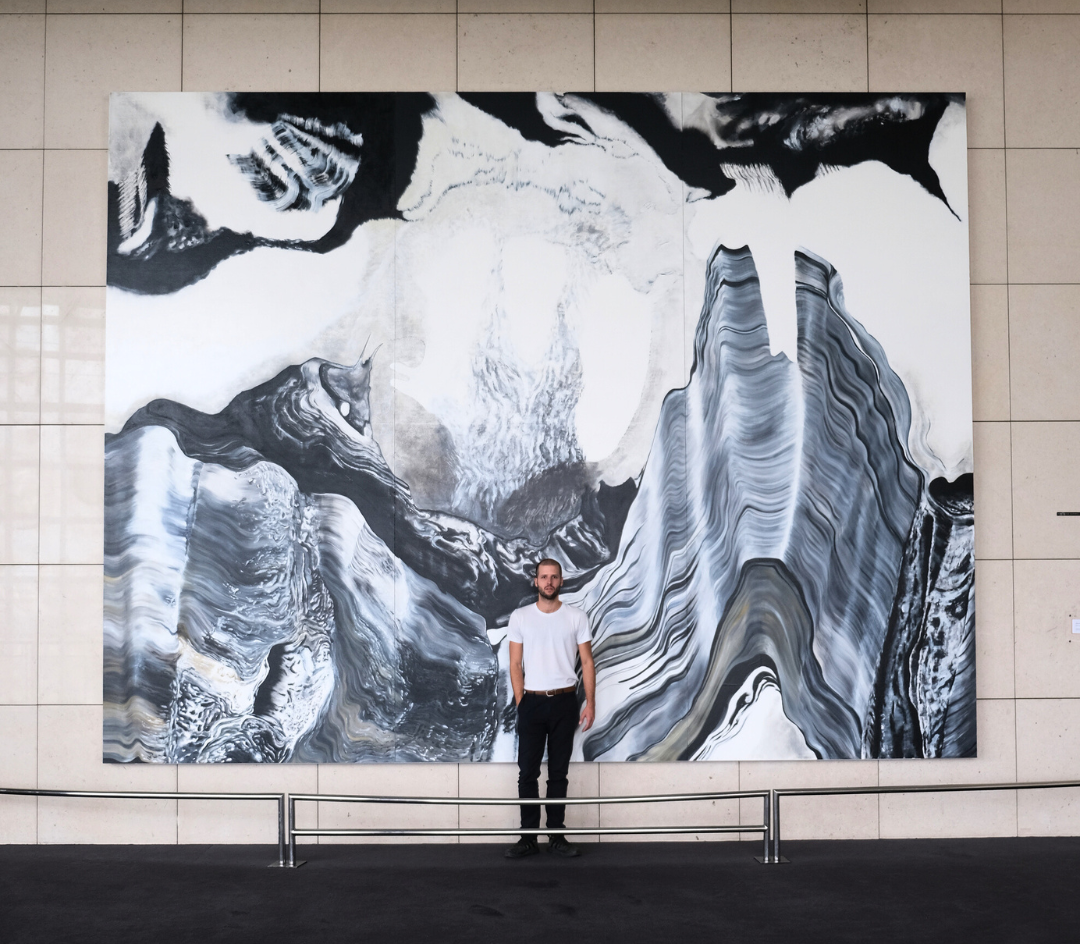
It’s the most accessible and visually striking format. A mural transforms a blank wall into a memorable, narrative-driven feature that’s perfect for photos. It tells the company’s story without a single word of corporate text.
Key benefits: immediate visual impact, high potential for sharing on social media, long lifespan, and cost-effective. A 20-square-meter mural in an open-plan office starts at €4,000 with an emerging artist and goes up to €25,000 for an established artist.
Key takeaway: A mural should be planned in collaboration with the artist from the very beginning of the space’s design, not added as an afterthought. That’s the difference between a work that’s fully integrated and an oversized poster.
A sculpture in a lobby, a suspended installation in an atrium, a three-dimensional piece in a meeting room: the 3D format creates an unparalleled physical presence. You can’t scroll past it; you can’t ignore it.
Key strengths: a natural conversation starter, leaves a lasting impression on visitors, versatile materials (metal, resin, fabric, plant-based materials). Budget: between €8,000 and €80,000, depending on complexity and size.
Case study: For Sopra Steria’s 2025 Kick-Off, Studio Artera commissioned Léo Caillard to create an installation that served as the backbone of the event’s entire design, using art as a unifying theme rather than mere decoration.
High-definition screens, video projections, and works that generate data in real time: digital art is the medium of the digital age. It has the advantage of being dynamic: as the artwork changes, the space is transformed.
Key strengths: complete adaptability, potential for visitor interaction, a strong signal of innovation for tech brands or premium reception areas. Budget: between €10,000 and €60,000, depending on the technical setup.
Important note: Digital art requires technical infrastructure (screens, servers, maintenance). Be sure to factor this cost into the budget from the outset.
An artistic work environment isn’t just about aesthetics. It sends a message to your teams and candidates: this company cares about the people who work here.
A study conducted by the University of Exeter (2010, confirmed in 2023) shows that employees in artistically enriched spaces are 32% more productive than in neutral spaces. More recently, 68% of candidates surveyed as part of a European HR survey (Hays, 2024) stated that the work environment influences their decision to accept or decline a job offer.
In the midst of the war for talent, an art installation visible from the very first interview is no mere trifle. It sends a clear message: we invest in our corporate culture.
The hospitality industry was the first to realize that art is a key factor for high-end customers. A hotel that displays works by carefully selected artists no longer just sells rooms; it sells a cultural experience.
Studio Artera supported The Hoxton Group in this initiative: curating artists whose work aligns with the unique identity of each property, installing artworks in common areas and signature guest rooms, and creating a dynamic art program that evolves with the seasons.
For a Michelin-starred hotel or restaurant, a comprehensive art program is structured as follows:

The first question our clients always ask is about the budget. Here are the price ranges we’ve seen in our projects:
These ranges include the artist’s fees, exhibition fees, and production oversight. They do not include infrastructure work (electrical, structural mounting) that depends on the venue.
1. Define the purpose: What kind of experience do you want to create? For whom? (customers, employees, visitors) What message should the space convey?
2. Choose the right format— mural, sculpture, or digital art—based on the space, budget, and intended use of the location.
3. Selecting the artist: Alignment between the artist’s approach and the company’s identity is more important than name recognition. This is the curatorial work that Studio Artera performs for each project.
4. Overseeing production: from creation to installation, including the contractual framework and exhibition rights. Do not overlook this step; this is often where projects go off the rails when managed without guidance.
An artistic mural in an office space starts at €4,000 for an emerging artist. A sculptural installation for a corporate lobby ranges from €8,000 to €50,000. For a comprehensive art program in a luxury hotel, expect to pay between €30,000 and €120,000. These budgets include the artist’s fees and exhibition rights.
The company acquires the artwork or a contractually defined right to exhibit it. The artist retains their moral rights under French law. Studio Artera establishes this legal framework at the outset of each project to avoid any future disputes.
A hotel art program is developed in three stages: defining the property’s artistic identity, selecting artists whose work aligns with that vision, and installing artworks in key areas (lobby, restaurant, signature guest rooms). Studio Artera supports hotel groups throughout this entire process.
Yes. Studies show that employees in artistically enriched spaces are up to 32% more productive. The work environment also influences 68% of candidates’ decisions to accept job offers. This is a concrete HR argument, not just an aesthetic one.
Would you like to transform your spaces into a brand experience?
Contact Studio Artera
👉 Explore our brand and corporate projects
👉 Discover the artists we represent


